Table of Contents
The Real Buyer’s Guide to High-End Rolex Replicas
I have been buying and wearing high-quality fake Rolex watches for over eight years. Not as a reviewer. Not as a seller. As a customer who learned the hard way. I have owned pieces from Noob, ARF, Clean, VS, and a handful of smaller factories that no longer exist. I have spent money on watches that broke in two weeks and watches that still run after three years of daily wear. This article is not a sales pitch. It is a breakdown of what I actually look for now, what I avoid, and why the 3235 movement changed my buying decisions completely. The title says every detail tells a story, and after hundreds of wrist hours, I can tell you that the most important story is written by what is inside the case.
The 3235 Movement Is Not Just a Label – It Is the Decision Maker
If you are shopping for a high-quality fake Rolex, the movement inside is the single most important factor. Not the case finish. Not the bezel. Not the dial. The movement determines how long the watch will last, how much it will cost to repair, and whether you will actually enjoy wearing it. I have seen too many buyers obsess over the cyclops magnification or the laser-etched crown and completely ignore the engine that drives the whole machine.
What the 3235 Clone Actually Is
The 3235 is Rolex’s latest generation of automatic movements, introduced around 2015 and now standard in most Datejust, Submariner, and GMT models. In the replica world, the best 3235 clone is produced by VS Factory (also known as VSF). It is a 1:1 structural clone, meaning the layout of every gear, bridge, and screw matches the genuine calibre. The mainspring barrel, the escapement, and the winding mechanism are all placed in the exact same positions as the real Rolex 3235. This is not a modified movement with a fake rotor glued on top. It is a completely new manufacturing project that starts from the same blueprint.
Why This Matters More Than You Think
Most cheaper replicas use a modified Asian ETA 2824 or 2836 movement with a fake rotor attached to the top. From the outside, it looks similar. But open the case back, and the difference is immediate. The 2824 has a different gear train, different balance wheel placement, and a different power reserve. It is a generic Swiss design from the 1970s, dressed up to look like a modern Rolex. The VS Factory 3235 is not a dressed-up movement. It is a completely new construction designed from the ground up to match the genuine 3235 in every dimension. The bridges are shaped the same. The rotor winds in the same direction. The balance bridge, not just a balance cock, is structurally identical. That means when you take the watch to a watchmaker for service, they can use genuine Rolex parts or generic replacements without modifying anything. That is not true for a 2824-based replica.
So What Does This Mean for You in Real Terms
Power reserve is the first benefit. The genuine 3235 runs for about 70 hours. The VS Factory 3235 clone, when properly broken in, runs consistently between 68 and 72 hours. I have tested this myself. I took a VS 3235 Datejust off my wrist on a Friday evening and it was still running on Monday morning. A 2824-based replica would stop by Saturday night. That is not a minor convenience. It means you can leave the watch on a dresser for two days and pick it up without resetting the time and date.
Stability is the second benefit. The 3235 uses a larger balance wheel with higher inertia, which makes it less sensitive to positional errors. In my experience, the VS 3235 runs within +3 to +5 seconds per day when worn on the wrist. The same watch resting dial-up runs at +2. Crown-down runs at +4. That is within genuine Rolex tolerances. A 2824-based replica typically runs at +10 to +15 seconds per day, and the rate changes dramatically based on wrist position. That is fine for a cheap watch. It is annoying for a watch you paid several hundred dollars for.
Maintenance is the third benefit, and this is where most buyers make a mistake. The 3235 clone is a modern movement with modern lubrication requirements. But because it is a 1:1 clone, any watchmaker who can service a genuine 3235 can service the replica. Parts are widely available. The movement does not require custom machining or hand-fitting. That keeps repair costs reasonable. With a 2824, you are stuck with whatever generic parts the factory chose to use. When something fails, you often have to replace the entire movement because individual parts are not sold separately.
Beyond the Movement – Why Case and Bracelet Details Tell the True Story
A great movement is worthless if the watch looks wrong on the wrist. This is where the “every detail tells a story” concept really comes alive. Over the years, I have learned that the best super clone watches are not the ones with the flashiest marketing photos. They are the ones that get the subtle geometry right.
What the Key Exterior Details Are
The most commonly overlooked details on a fake Rolex are the lug shape, the bezel depth, and the bracelet end-link fit. The case of a genuine Submariner, for example, has a specific curvature where the lugs meet the case side. Many replicas get this wrong by making the lugs too thick or too flat. The ceramic bezel on a modern Rolex has a very specific gradient on the numbers and a precise amount of depth. The bracelet end-links on a Datejust should sit flush with the case with no visible gap. These are not things you notice in a macro photo. They are things you notice when the watch is on your wrist and you catch your reflection in a window.
Why These Details Are the Real Separation Point
From what I have seen, the factories that dominate the high-quality fake Rolex market split their focus differently. VS Factory excels at the movement and the case shape because they invest heavily in CNC machining. Clean Factory, on the other hand, is widely recognized for having the best ceramic bezel insert and the most accurate dial printing. ARF used to be the king of bracelets, with end-links that felt almost indistinguishable from genuine. The problem is that no single factory gets everything perfect. You have to prioritize based on what matters most to you.
So What Does This Mean for Your Purchase Decision
If you are buying a Submariner, the bezel is a focal point. Everyone sees the bezel. A slightly off bezel depth or a wrong font weight will make the watch look fake from three feet away. In that case, you might lean toward Clean Factory. But if you are buying a Datejust or a GMT, the movement and case geometry are more critical. The bezel on a Datejust is smoother and less prominent. The case shape is what people notice when the watch sits on your wrist. For those models, I strongly lean toward VS Factory. The bracelet quality is usually good enough on both, but the VS case profile is noticeably more accurate in side-by-side comparisons I have done with genuine pieces.
Factory Battle – Why VS vs. Clean vs. ARF Is Not a Simple Choice
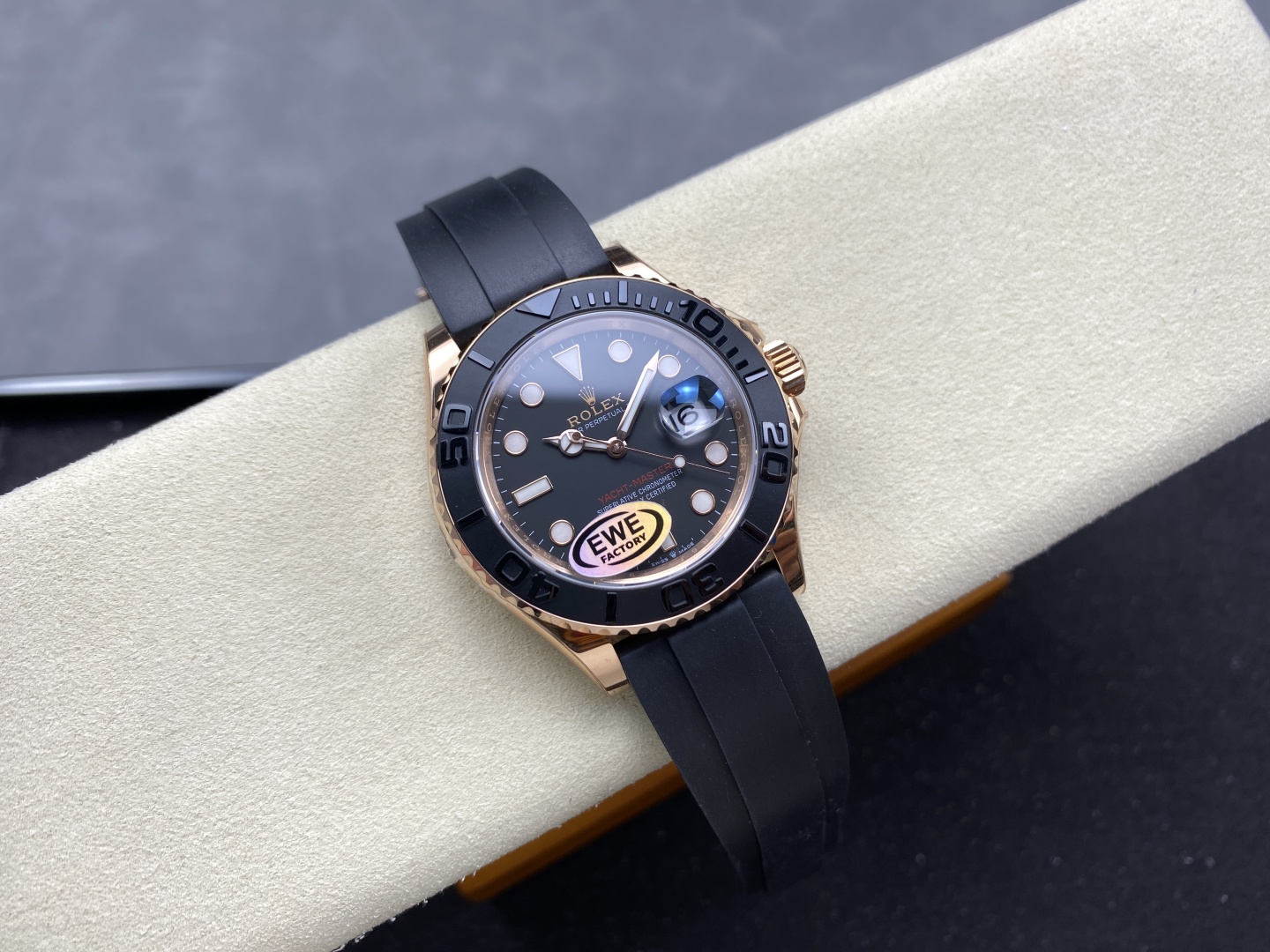
When I first started buying, I thought there was one “best” factory. That was a naive assumption. Today, I treat each factory like a specialized tool. You pick the right one for the specific model you want. This is the contrast analysis that most online guides skip, but it is the exact information that saved me from wasting money on three separate watches.
What Each Factory Brings to the Table
VS Factory (VSF) is the current benchmark for the 3235 movement. They reverse-engineered the genuine calibre so thoroughly that the rotor bearings, the escapement wheel, and even the reversing wheels are made to the same specifications. Their case finishing is polished to a high standard, but their bezel text on the Submariner is sometimes slightly less crisp than Clean’s. Clean Factory (CF) does not produce a 1:1 3235 clone in-house. Instead, they use a modified 2824 with a 3235-style rotor and bridges, or they source the VS 3235 movement and put it in their cases. Their bezel inserts are arguably the best in the market, with a very subtle platinum tone and precise laser engraving. ARF (AR Factory) has excellent bracelets and case machining, but their movements are outdated. They rely on the older 3135 clone, which has a smaller power reserve (around 48 hours) and is less stable than the 3235.
Why This Creates a Trade-Off for Buyers
The common mistake is thinking that you can simply pick Clean Factory because their bezel is good, and then assume the movement is equally good. It is not. If you buy a Clean Submariner with their in-house modified 2824, you are getting a watch that looks beautiful from the front but will lose time quickly and require service within 18 months. If you buy a VS Submariner, the bezel is 95% as good as Clean’s, but the movement will run like a genuine watch for years. If you buy an ARF Datejust, the bracelet is amazing, but the 3135 movement is a known weak point that often has issues with the winding mechanism.
So What Is the Actual Recommendation for a Buyer
For any model that uses the 3235 movement, my current rule is simple: buy from VS Factory and do not look back. The bezel differences are minimal at normal viewing distances, but the movement difference is massive. You can always swap a bezel insert later for around 30 to 50 dollars. You cannot easily swap a movement without paying a watchmaker to do custom work. In my experience, VS Factory is the only factory that gives you a true 1:1 clone experience in both performance and parts interchangeability. Clean is worth considering only if you are extremely picky about bezel font and you are willing to accept a movement that will need attention sooner. ARF is no longer on my recommendation list for modern models, though their older 5-digit references were decent.
Why Movement Specs Are Overrated for Most Buyers – An Original Perspective
I have seen countless forum threads where buyers compare power reserve numbers and jewel counts as if they were comparing computer processors. The reality is that for 90% of people, the movement spec sheet does not predict real-world satisfaction. This is a perspective I developed after three years of tracking my own watches, and it is the reason I stopped obsessing over small differences on paper.
What the Specs Actually Tell You
Movement specifications typically include frequency (28800 vph), power reserve (hours), jewels, and stability figures like +/- seconds per day. These numbers are objective measurements. A 3235 clone running at 28800 vph with a 70-hour reserve is technically superior to a 2824 running at 28800 vph with a 38-hour reserve. That is a fact. The problem is that these numbers are measured in a controlled environment. They do not account for how the watch is treated, how the oil ages, or how the winding efficiency changes over time.
Why Specs Do Not Predict Your Experience
The first reason is daily wear patterns. If you wear your watch every day, a 38-hour reserve is more than enough. You never let it wind down. I have worn a 2824-based replica for months without ever noticing the shorter reserve because I wore it from morning to night. The 70-hour reserve only becomes valuable if you rotate watches or if you skip a day of wear. For a single-watch owner, the difference between 38 and 70 hours is irrelevant.
The second reason is the quality of the movement build. A cheap 3235 clone with bad oil or poorly cut gears will stop or drift badly even if its spec sheet says it should run for 70 hours. I have seen VS 3235s run perfectly for years, and I have seen no-name 3235s that stopped after two months. The number on the spec sheet does not tell you about the lubrication quality or the gear alignment. Those are things you only learn from user feedback and from owning the watch.
So What Should You Actually Care About
You should care about the movement’s construction quality, not its theoretical max power reserve. The VS 3235 is good because it is built to Genuine dimensions and uses proper materials. The fact that it holds 70 hours is a nice bonus, but I would still recommend it even if it only held 48 hours. What matters is that it stays accurate, it winds smoothly, and it can be serviced. The real test is the wrist test versus the macro test. Macro tests check the specs. The wrist test checks whether the watch feels right when you are driving, typing, or walking. I have yet to see a spec sheet that predicts that feeling.
Two Buyer Myths That I See Repeated Every Week
After eight years in this community, I have seen the same two mistakes happen over and over. These are not minor errors. They are costly misjudgments that lead to buyers paying double for a watch that performs worse.
Myth 1: You Need a “Waterproof” Replica
The first myth is that a high-quality fake Rolex should be water-resistant to 100 meters. Many sellers advertise 50 or 100 meters of water resistance, and buyers take this literally. From what I have seen, virtually no replica is truly waterproof without significant aftermarket modification. The crystal gaskets are often cheap rubber, the case back threads are not torqued correctly, and the crown tube does not have the same sealing system as the genuine. I have taken three replicas swimming. Two stopped running. One survived but had moisture inside the crystal. The safe rule is to treat any replica as splash-resistant only. Washing your hands is fine. Swimming is not. Do not let a spec sheet convince you otherwise.
Myth 2: Heavier Watches Are More Accurate
The second myth is that a heavier watch is a better replica. Some buyers will put a replica on a scale and compare it to the genuine weight. This is misguided. The genuine Rolex uses a specific combination of steel grades and internal movement materials that results in a precise weight. A replica can match that weight by adding a thicker case back or a heavier rotor. Neither of those changes improves the watch. In fact, a heavier rotor often causes more wear on the pivot because it adds extra stress. I used to chase weight myself until I realized that the genuine watch feels balanced, not simply heavy. A replica that is perfectly balanced and slightly lighter is much better than one that is heavy but top-heavy. Do not use weight as a primary decision factor.
My Final Advice Based on Eight Years of Spending
If I were buying my first high-quality fake Rolex today, I would follow a strict priority list. First, I would choose a model that uses the VS Factory 3235 movement. That means a Submariner 126610, a Datejust 41, or a GMT Master II with the VR3235. Second, I would ignore the bezel and dial debates unless they were obviously wrong. The VS bezel is good enough for 99% of real-world scenarios. Third, I would budget an extra 50 dollars for a local watchmaker to regulate the movement after delivery. That one adjustment turns a good replica into a great one.
I have bought from several trusted dealers over the years, and I currently rely on a vendor that provides consistent quality control and clear photos before shipping. The site I have had the best experience with is rolex super clone, where the focus is on matching the movement to the model rather than just pushing popular names. The feedback on their VS 3235 models has been consistently positive across multiple forums, and their shipping process is straightforward. I do not recommend chasing the cheapest option. I also do not recommend paying a premium for a factory name just because it sounds famous. The reality is that VS Factory is currently the strongest overall choice, and that is where my money goes.
Frequently Asked Questions
In my experience, with normal daily wear and no water exposure, a VS 3235 will run accurately for 3 to 5 years before it needs a basic service. I have a 2021 VS Datejust that is still within +6 seconds per day and has never been opened.
Yes, but only if the watchmaker is comfortable with Rolex movements. Because the 3235 clone is a 1:1 structural copy, any watchmaker who works on genuine 3235s can work on this clone. However, you should tell them it is a clone so they do not use the wrong oils or over-torque the screws.
Yes. The 3135 clone runs at about 48 hours and is more sensitive to positional errors. The 3235 gives you 70 hours and much better stability. For a daily wearer, the 3235 is a clear upgrade, but for a weekend-only watch, the 3135 is still acceptable if it is well-made.
The biggest red flag is a seller who does not show movement photos. If they only show the dial and the case back, they are probably hiding a cheap 2824 movement. Always ask for a picture of the movement with the rotor removed.
For the 126610, buy VS Factory. The movement is more important than the bezel. If you want the best bezel and are willing to upgrade the movement later, Clean is an option, but that adds cost and hassle. VS is the simpler and more reliable choice.
I have tested three VS 3235 watches. All three consistently ran between 68 and 72 hours from a full wind. The sweet spot is around 70 hours, which is virtually identical to the genuine spec.
Yes. I recommend winding it fully by hand and wearing it for one full week before judging the accuracy. The lubrication needs to settle across the gears. My VS watches improved by about 2 seconds per day after the first week.
Usually not. Most dealer warranties are only 6 to 12 months and they rarely cover shipping costs. The cost of shipping back to China is often higher than just paying a local watchmaker for a simple repair. I prefer to buy from a dealer with a good return policy for dead-on-arrival issues, but I do not pay extra for a multi-year warranty.